


Coffee Roasting
May 13, 2020 – Zab Cafe
Text: Isabelle Huard
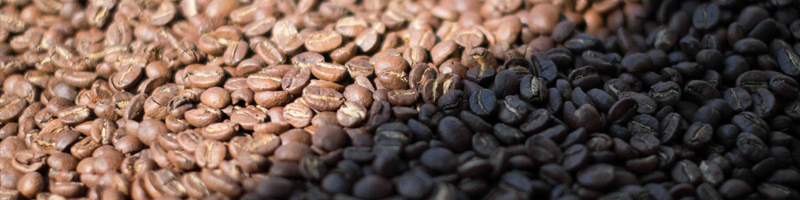
Coffee roasting is the cooking of green coffee beans. During roasting, the beans undergo many changes to their chemical and physical properties. One fundamental transformation takes place, known as the Maillard reaction. This reaction —which is actually a series of reactions— is responsible for the change in colour and the release of aromas when food is cooked. It’s the same reaction that happens when we toast our bread in the morning, for example. During roasting, amino acids and simple sugars turn into new molecules that bond with one another. As roasting progresses, the new molecules created by the interaction between amino acids and sugars transform in turn into further new molecules, producing an increasingly dark colour and releasing increasingly intense aromas. Beyond a certain degree of roast, the beans undergo a breakdown that is responsible for the burnt taste, part of the bitterness, and the black colour. The aromatic spectrum narrows and smoky, even charred notes take over. A dark roast is in fact sometimes used to mask the defects of a lower-quality coffee.
For a long time, consumers had to make do with just two coffee options: “mild” and “strong”. People also often spoke of “brown” or “black” coffee, once again referring to the degree of roast, with no further nuance or explanation. These terms are still used by many roasters, but in the world of specialty coffee, we talk instead about light, medium and dark roasts. What’s more, roasters now put much more emphasis on tasting notes. Influenced by a multitude of factors, including origin, varieties, the different bean processing methods, roasting and extraction, these notes help guide consumers in their choice according to their preferences.
The growth of the specialty coffee industry has led to a better understanding of the influence of terroir on the beans, advances in processing techniques and higher quality standards; the roaster is therefore better equipped to highlight the inherent qualities of each coffee. Their work (or should we say their art!) is crucial. Their know-how not only allows us to enjoy coffee the way we do, but also to discover what each coffee has to offer, along with the work and expertise of the producers during the growing and post-harvest processing of the beans. For their part, consumers are no longer limited to choosing between two options, but can choose from a multitude of flavour profiles, according to their tastes!